In the quiet corners of our staff rooms and the busy corridors of our schools, a silent crisis of identity persists. Many educators today operate under a heavy, unspoken burden: the feeling that their work is "secular" and therefore somehow detached from their spiritual life. We have been conditioned to believe that the sanctuary is for worship and the classroom is for work—that teaching biology, calculus, or economics is a mere career, while teaching theology is a calling.
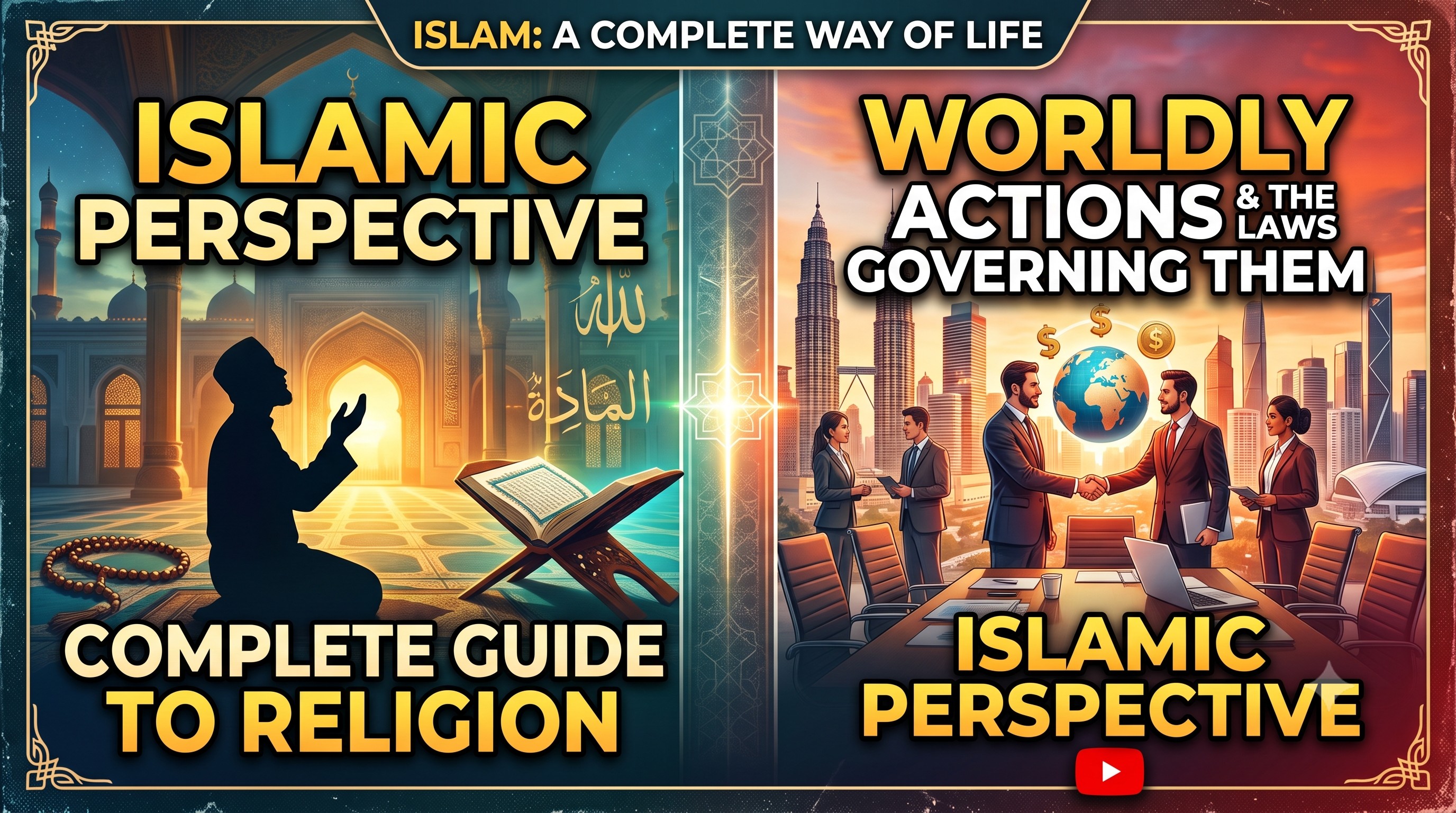
This divide is a profound theological and strategic error. By compartmentalizing "religious" and "worldly" knowledge, we have inadvertently stripped the educator of their greatest honor. To teach is not merely to deliver a syllabus; it is to handle an Amanah (Trust) of civilizational proportions. It is time to bridge the gap between the blackboard and the prayer mat and recognize that the educator is not just an employee of a school system, but an architect of the human soul.
The Prophetic Pedagogy: More Than Just a Profession
The highest status an educator can claim is rooted in the very identity of Prophet Muhammad (PBUH). When he defined his own mission, he did not lead with his status as a statesman or a commander. He explicitly identified himself as a teacher (Mu’allim) sent to simplify the complex and guide humanity toward benefit.
This identification transforms the classroom. When a teacher enters a room with the intent to clarify, to simplify, and to empower, they are not just performing a civic duty; they are stepping into the Prophetic inheritance. Every teacher who makes a difficult concept accessible is following a divine methodology:
"I was not sent as one who makes things difficult or harsh; rather, I was sent as a teacher who follows the easy way."
Paradigm Shift 1: The Universal Definition of "Khair" (Good)
We often mistakenly believe that spiritual merit is reserved for those teaching scripture. However, the Prophetic tradition speaks of the Mu’allimul Khair—the Teacher of Good. In the original Arabic and the broader Islamic worldview, "Good" (Khair) is an expansive term. It encompasses any knowledge that provides benefit to humanity, sustains life, or upholds justice.
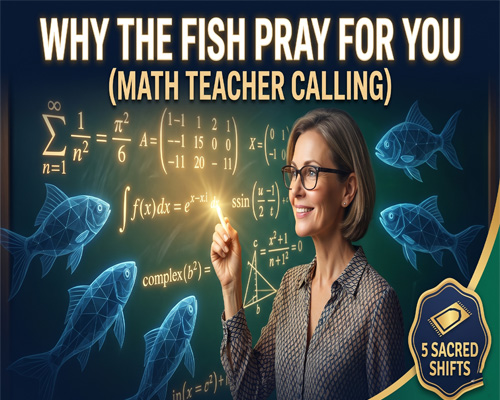
This is why the imagery provided in the tradition is so startling: we are told that every creature in existence—extending to the very fish in the depths of the ocean—seeks forgiveness and prays for the one who teaches "Good." Why would a fish pray for a math teacher? Because when that teacher imparts the logic of equations and the precision of numbers, they are equipping a generation to manage resources, engineer clean water systems, and understand the divine proportions of the natural world. If the knowledge benefits the creation, the Creator honors the teacher.
Paradigm Shift 2: Shattering the Secular-Religious Binary
The rigid wall we have built between "religious education" (Sharia) and "worldly education" (Science and Arts) finds no basis in the origins of our faith. In fact, the very narrative of human origin suggests the opposite.
When Allah established the superiority of Prophet Adam (AS) over the angels, the test was not one of ritual worship or dhikr—the angels already excelled in that. Instead, the "competitive advantage" given to Adam was the knowledge of the "Names of all things." According to the classical commentators, this referred to the physical world: mountains, trees, seas, and the natural sciences. Our very mandate as stewards (Khulafa) of this Earth was founded on what we now wrongly call "secular" knowledge.
Consider the companions of the Prophet:
Khalid bin Walid: He was not a prominent narrator of Hadith or a legal scholar. In fact, he narrated very few traditions. Yet, his mastery of military science and strategic logic earned him the title "The Sword of Allah." His "worldly" expertise was his primary path to divine excellence.
Abdur Rahman bin Awf: His brilliance lay in market dynamics and economics. His mastery of trade was not "extra-curricular" to his faith; it was the vehicle for his service to the community.
As the scholar Yusuf al-Qaradawi aptly synthesized:
"Religion is knowledge, and knowledge is religion; the two can never be separated."
Paradigm Shift 3: Science as a Pathway to the Divine
There is a famous Quranic verse often used to describe the clerical class: "Only those of His servants who have knowledge (Ulama) truly fear Allah."
However, looking at the immediate context of this verse reveals a surprising strategic insight. This statement does not follow a discussion on legal rulings or ritual prayer. It follows a vivid description of the natural world: the descent of rain, the diversity of fruits, and the geological "paths" (Judad) within mountains—the distinct streaks of white, red, and varying shades of black.
The "Ulama" mentioned here are, in the primary context, the geologists, the botanists, and the meteorologists. Studying the "Life Arts" is not a distraction from God; it is a primary method of knowing Him. The biology teacher explaining the complexity of a cell or the physics teacher demonstrating the laws of gravity is, in fact, an instructor of Awe. They are leading students to the Divine Architect through the study of His blueprints.
Paradigm Shift 4: Technology as a Catalyst for History
In our current era, technical and technological mastery is not a neutral pursuit—it is a strategic necessity. The Algerian thinker Malek Bennabi provided a powerful framework for this:
"Technology speeds up the flow of history."
Without technology, a community's message moves slowly, person-to-person. With it, a single voice can reach millions instantly. From a strategist’s perspective, technology is a force multiplier for Dawah (outreach) and community independence. If we fail to master the tools of our age, we remain dependent on others, unable to protect our values or project our voice. The teacher of technology or computer science is therefore a guardian of the community’s agency and its future strategic independence.
Paradigm Shift 5: The 12-Year Window of Influence
The most daunting aspect of the teaching profession is the "Amanah" of time. From a human capital perspective, the 12-year developmental window (ages 6 to 18) represents a community’s most significant investment of social and spiritual capital.
Students spend their most vital, formative years and their most energetic daily hours (8:00 AM to 2:00 PM) under the direct influence of their teachers. During this window, you are not just delivering a syllabus; you are architecting a generation’s worldview. To treat this as "just a job" or to neglect the character of the students during these hours is more than a professional failure; it is a betrayal of the highest order. A teacher is either building the future or, through negligence, burying it.
Conclusion: The Legacy of Continuous Charity
The influence of a teacher is one of the few things in this universe that outlives the grave. Through the concept of Sadaqah Jariyah (Continuous Charity), the knowledge you impart becomes a living legacy. Every time a student uses a mathematical formula to solve a problem, uses a scientific principle to heal, or uses a technical skill to provide for their family, the reward flows back to the teacher who lit the first spark.
We are in the business of building humans, not buildings. We are heirs to a Prophetic mission that views the laboratory, the counting house, and the classroom as sacred spaces.
To every educator standing at the front of a classroom today: Are you merely delivering a syllabus, or are you fulfilling the Prophetic trust of architecting the future?
E - Book Download
https://drive.google.com/file/d/1986Q8BG9Ew3yALLA9KN8ILlREMB8eqm8/view?usp=sharing